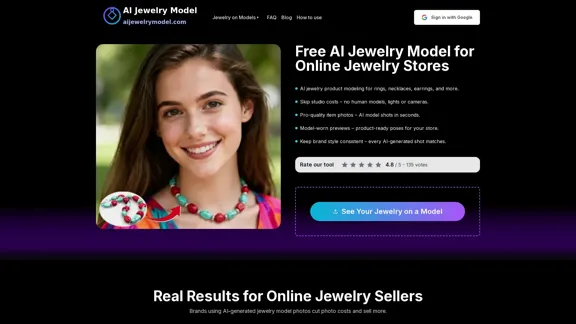
models, ring models, and bracelet models. Necklace styles include pearl, gold, diamond, silver, gemstone, and chain necklaces, while bracelet options include tennis, charm, friendship, beaded, chain, cuff, and birthstone bracelets. These categories help users create imagery tailored to different product types.
3. ### Automated Image Generation
Users can upload a clear jewelry product photo, select a suitable virtual model and style, and generate a model-worn image. The workflow is designed to reduce the time and effort required for jewelry product photography and routine catalog updates.
4. ### Standard and Studio Generation
AI Jewelry Model offers Standard image generation and a Studio option on its Pro and Premium plans. Standard generation costs 10 credits per image, while Studio generation costs 40 credits per image. The Studio option provides an additional generation choice for users who need more flexibility in producing jewelry visuals.
5. ### E-commerce and Marketing Applications
Generated images can be used for product pages, online marketplaces, social media posts, and advertising materials. The website specifically identifies Shopify, Amazon, and Etsy sellers as potential users. Model-worn previews can also help businesses present jewelry designs in a more contextual format.
6. ### Commercial Use and Watermark-Free Downloads
Paid plans include watermark-free downloads and commercial-use rights, subject to the platform's license. These features make the service relevant to businesses that need reusable jewelry product images for online stores, promotional campaigns, and brand content.
7. ### Consistent Brand Presentation
Reusable model templates help brands maintain a consistent visual style across product listings and marketing channels. This can be useful for businesses managing large catalogs or introducing new collections that require a unified presentation.
8. ### Privacy and Image Management
The website states that uploaded images remain private and under the user's control, and that users can delete images at any time. It also states that designs will not be converted into public stock without consent. These claims are relevant to jewelry designers and manufacturers working with unreleased products.
HelpfulTips
Q&A
What is AI Jewelry Model?
AI Jewelry Model is an AI-powered jewelry photography platform that places jewelry products on virtual models. It helps online retailers, jewelry brands, designers, and manufacturers create model-worn images from existing product photos without arranging a traditional photoshoot.
How do I create jewelry images with AI Jewelry Model?
The process involves three main steps:
- Upload a clear photo of your jewelry item in a supported format, such as PNG or JPG.
- Choose a virtual model and the desired style or placement for the jewelry.
- Generate the image and download the result for use on your website, online store, or social media.
Can I use AI Jewelry Model for free?
The website advertises a free trial for users who want to test AI jewelry image generation. However, the provided website content does not specify the exact number of free credits or images available, so users should check the official website for the current trial conditions.
Which types of jewelry does the platform support?
The platform provides options for rings, necklaces, earrings, and bracelets. It also highlights specific necklace and bracelet styles, including pearl necklaces, gold necklaces, diamond earrings, tennis bracelets, charm bracelets, and other jewelry categories.
Can I use the generated images commercially?
According to the website, its paid plans include commercial-use rights and watermark-free downloads. Users should review the platform's license and terms to understand any applicable restrictions before using generated images in commercial campaigns.
Can AI Jewelry Model replace traditional jewelry photography?
AI Jewelry Model can help reduce the need for traditional photoshoots, particularly for routine product listings, catalog updates, and social media content. However, it may not fully replace professional photography for every campaign. Brands should review generated images for product accuracy, especially when precise gemstone details, metal finishes, proportions, and setting designs are important.
Do I need photo editing or 3D modeling skills?
The website presents the platform as a browser-based tool that does not require specialized photo editing or 3D modeling skills. Users can upload a product image, select a model and style, and let the AI generate the result.
Is my uploaded jewelry design kept private?
The website states that uploaded images remain private, users can delete them, and designs will not become public stock without consent. Businesses handling confidential or unreleased designs should review the privacy policy and terms to understand how uploads and generated images are stored and processed.
Price
AI Jewelry Model advertises a free trial and three paid plans with annual billing. The listed monthly prices represent the monthly equivalent when billed annually.
| Plan | Monthly Equivalent | Annual Billing | Annual Credits | Standard Images | Studio Images |
|---|---|---|---|---|---|
| Basic | $9.99/month | $119.88/year | 5,000 | Up to 500 | Not included |
| Pro | $19.99/month | $239.88/year | 13,000 | Up to 1,300 | Up to 325 |
| Premium | $39.99/month | $479.88/year | 34,000 | Up to 3,400 | Up to 850 |
Plan details:
-
Basic: Standard generation, access to all model templates, watermark-free downloads, commercial use, and email support.
-
Pro: Standard and Studio generation, access to all model templates, watermark-free downloads, commercial use, and priority email support.
-
Premium: Standard and Studio generation, access to all model templates, watermark-free downloads, commercial use, and fast-track email support.
Standard images cost 10 credits each, while Studio images cost 40 credits each. Annual credits are issued upfront and expire at the end of the annual billing period. The website advertises a 33% saving on the listed annual plans and states that renewal can be canceled at any time.
Users should consult the official pricing page to confirm current offers, free-trial conditions, and plan terms before subscribing.
Evaluation
1. ### Strengths: Simplified Jewelry Photography
AI Jewelry Model addresses a practical challenge for online jewelry businesses: creating attractive product images without the time and expense of traditional photoshoots. Its upload-and-generate workflow makes AI jewelry photography accessible to sellers who lack photography equipment or dedicated creative teams.
2. ### Strengths: Broad Product Coverage
The platform supports several major jewelry categories and provides specific options for different necklace and bracelet styles. This makes it suitable for retailers with varied catalogs rather than businesses selling only one type of jewelry.
3. ### Strengths: Clear Pricing and Credit Allocation
The Basic, Pro, and Premium plans specify annual prices, credit allowances, generation types, and support levels. The credit system also makes it possible to estimate image-generation capacity before purchasing a plan, although the actual number of images depends on the selected generation mode.
4. ### Strengths: Commercial Workflow Support
Watermark-free downloads and stated commercial-use rights make the platform relevant to businesses producing e-commerce listings, social media content, and advertising materials. Reusable model templates may also help maintain visual consistency across large product catalogs.
5. ### Areas for Improvement: Product Accuracy Requires Verification
Jewelry photography depends on fine details, including gemstone placement, chain links, ring settings, reflections, and metal finishes. The website promotes realistic results, but the supplied information does not independently establish how accurately the tool preserves these details across different products. Users should inspect generated images before publishing them.
6. ### Areas for Improvement: Limited Independent Performance Evidence
The website reports potential reductions in photography costs and improvements in sell-through rates and customer engagement. These figures are attributed to internal tests and customer-reported outcomes, with results varying by catalog quality, traffic sources, seasonality, and image usage. They should therefore be treated as indicative claims rather than guaranteed results.
7. ### Areas for Improvement: Free-Trial Details Could Be Clearer
The website could provide more explicit details on the free trial, including the number of credits available and the duration of the trial period.