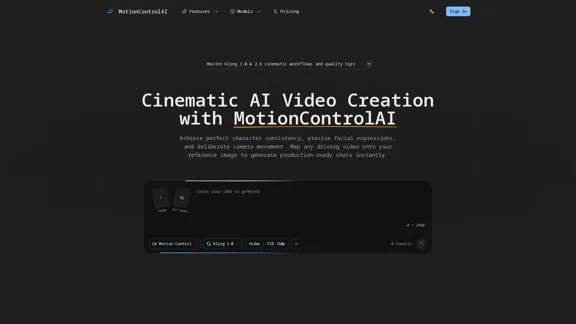
MotionControlAI offre des flux de travail cinématographiques avancés pour la création de vidéos AI, permettant aux utilisateurs d'atteindre une cohérence parfaite des personnages, des expressions faciales précises et des mouvements de caméra délibérés. En mappant des vidéos de conduite sur des images de référence, il génère instantanément des prises prêtes pour la production, en faisant un outil puissant pour les créateurs amateurs et professionnels.
MotionControlAI - Animation avancée par IA et contrôle de personnage
Élevez votre production vidéo AI avec notre cadre de contrôle de mouvement à la pointe de la technologie. En utilisant Kling 3.0 et 2.6, vous pouvez garantir une performance cohérente des personnages, capturer des expressions faciales subtiles et créer des mouvements de caméra dynamiques, le tout visant à offrir des résultats cinématographiques professionnels.
Vidéo
Mar 23, 2026
Visiter le site web
Kling 3.0, Kling 2.6 Présentation
Kling 3.0, Kling 2.6 Fonctionnalités
-
Cadre de Référence Parfait
Initiez votre séquence de contrôle de mouvement avec un portrait haute fidélité qui présente une anatomie propre et des traits faciaux dégagés.
-
Vidéo de Mouvement de Conduite
Téléchargez une vidéo de conduite propre pour injecter des actions, un rythme et des expressions nuancées dans le système.
-
Liaison d'Éléments & PromptLock
Verrouillez l'identité principale avec la liaison d'éléments de contrôle de mouvement et ajoutez des invites textuelles précises détaillant le langage cinématographique de la caméra.
-
Rendre, Inspecter et Calibrer
Évaluez la sortie initiale pour la fluidité temporelle et itérez méthodiquement, en isolant une variable créative à la fois.
-
Capacité de Flux de Travail Avancée
Découvrez l'immense potentiel de l'animation AI appliquée dans divers scénarios, montrant un transfert d'action pur des vidéos de conduite d'éléments aux références d'identité absolue.
-
Préréglages de Caméra Pré-Calibrés
Injectez un zoom délibéré, une inclinaison et une logique de suivi localisée dans votre recette pour garantir que chaque sortie s'aligne avec votre grammaire visuelle.
-
Cycles d'Itération Accélérés
Archivez vos paramètres de contrôle de mouvement exacts pour réduire considérablement les réessais frustrants et améliorer la productivité.
Kling 3.0, Kling 2.6 Comment utiliser ?
- Commencez par obtenir un cadre de référence parfait pour garantir des sorties de haute qualité.
- Utilisez une vidéo de mouvement de conduite propre qui représente fidèlement les actions et expressions souhaitées.
- Implémentez la liaison d'éléments pour maintenir la fidélité des personnages lors de scènes dynamiques.
- Inspectez et calibrez régulièrement vos sorties pour obtenir les meilleurs résultats.
- Utilisez des préréglages de caméra pré-calibrés pour un alignement visuel cohérent.
Kling 3.0, Kling 2.6 Questions fréquentes
Qu'est-ce que le contrôle de mouvement et comment transforme-t-il la génération de vidéos AI ?
Le contrôle de mouvement fait référence à la technique d'utilisation de mouvements précis pour capturer des vidéos, qui peut être améliorée par l'AI pour créer des sorties homogènes et cohérentes.
Comment choisir entre Kling 3.0 et Kling 2.6 pour mes flux de travail ?
Le choix dépend de vos besoins spécifiques ; Kling 3.0 offre des fonctionnalités et des capacités avancées par rapport à Kling 2.6.
Quel est le processus pour exécuter avec succès le contrôle de mouvement AI ?
Le processus implique de trouver un cadre de référence, d'acquérir une vidéo de mouvement de conduite, d'activer la liaison d'éléments et de rendre la sortie tout en itérant pour la qualité.
Quels actifs d'entrée garantissent les sorties de la plus haute qualité ?
Des portraits de référence haute fidélité et des vidéos de mouvement de conduite propres sont essentiels pour obtenir les meilleurs résultats.
Qu'est-ce que la liaison d'éléments et pourquoi est-elle cruciale pour la génération de vidéos ?
La liaison d'éléments garantit que l'identité du personnage reste cohérente tout au long de la vidéo, ce qui est vital pour maintenir la cohérence visuelle.
Comment devrais-je intégrer les préréglages de caméra dans mon flux de travail ?
Les préréglages de caméra doivent être injectés au début du flux de travail pour garantir que toutes les sorties adhèrent à la grammaire visuelle souhaitée.
Comment ces systèmes gèrent-ils des cas extrêmes et des occlusions sévères ?
Les systèmes sont conçus pour gérer des scénarios complexes en utilisant des algorithmes avancés qui maintiennent la fidélité des personnages et la compréhension spatiale.
Ce cadre est-il viable pour les opérations de contenu SEO commercial ?
Oui, le cadre peut être utilisé efficacement pour créer du contenu vidéo engageant qui s'aligne avec les stratégies SEO.
Kling 3.0, Kling 2.6 Prix
Les données de prix ne sont pas encore disponibles ; veuillez visiter le site officiel pour les dernières informations tarifaires.
* Les prix sont donnés à titre indicatif, veuillez vous référer aux données officielles les plus récentes.
Kling 3.0, Kling 2.6 Évaluation
- MotionControlAI excelle dans la génération de sorties vidéo de haute qualité avec une fidélité constante des personnages et des mouvements nuancés, ce qui en fait un outil précieux pour les créateurs de vidéos.
- Les flux de travail avancés et les fonctionnalités de liaison d'éléments améliorent considérablement le processus de production, permettant un contrôle précis sur les séquences vidéo.
- Cependant, les utilisateurs peuvent rencontrer une courbe d'apprentissage lors de la maîtrise du système, en particulier pour comprendre les subtilités de la liaison d'éléments et des préréglages de caméra.
- Bien que l'outil soit puissant, il peut nécessiter des ressources ou une formation supplémentaires pour que les équipes exploitent pleinement ses capacités, en particulier dans des projets complexes.
Sites web associés
Voir les détails
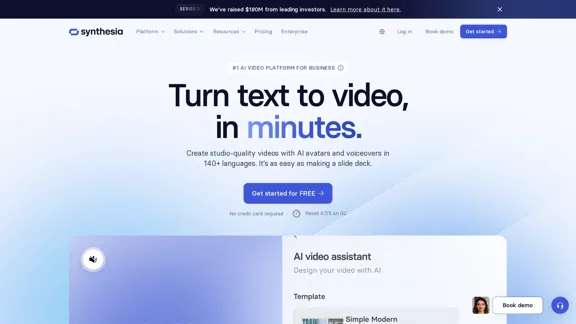
Générateur de vidéos AI gratuit - Créez des vidéos AI dans 140 langues
Générateur de vidéos AI gratuit - Créez des vidéos AI dans 140 languesCréez facilement des vidéos générées par IA à partir de votre texte en utilisant des avatars et des voix off IA de pointe disponibles en plus de 140 langues. Essayez notre générateur de vidéos IA gratuit dès aujourd'hui !
2.03 M
Voir les détails
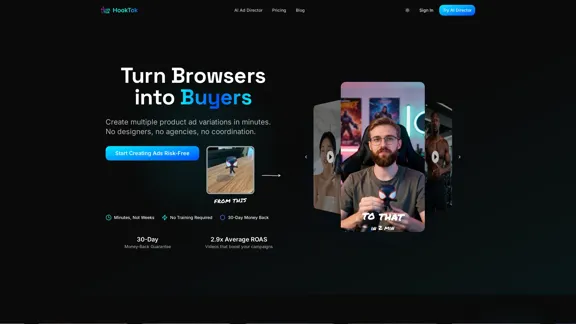
Publicités vidéo de produits AI pour le commerce électronique | HookTok
Publicités vidéo de produits AI pour le commerce électronique | HookTokCréez un contenu audio, vidéo et image incroyable avec des outils alimentés par l'IA.
0
Voir les détails
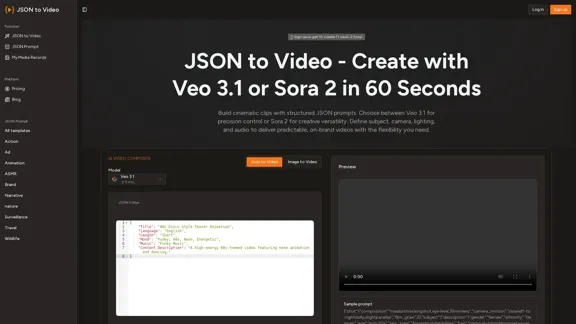
JSON to Video - Générateur de vidéos AI avec Veo 3.1 et Sora 2
JSON to Video - Générateur de vidéos AI avec Veo 3.1 et Sora 2Créez de magnifiques vidéos sans effort en utilisant des invites JSON structurées. Avec la possibilité de choisir entre les modèles Veo 3.1 et Sora 2, vous pouvez profiter d'une génération de vidéos AI flexible qui offre des résultats cohérents et sûrs pour la marque.
5.17 K
Voir les détails
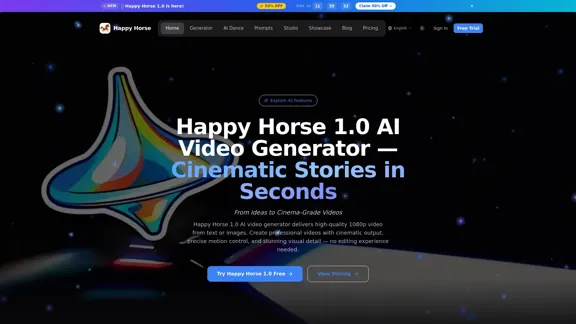
Happy Horse - Générateur de vidéos AI Happy Horse 1.0
Happy Horse - Générateur de vidéos AI Happy Horse 1.0Créez des vidéos cinématographiques époustouflantes sans effort avec Seedance 2.0. Profitez de fonctionnalités telles que la synchronisation audio-visuelle native, la cohérence narrative multi-plan, et le contrôle dynamique précis en physique, tout en utilisant des flux de travail textuels et d'image à vidéo sans couture.
--
Voir les détails
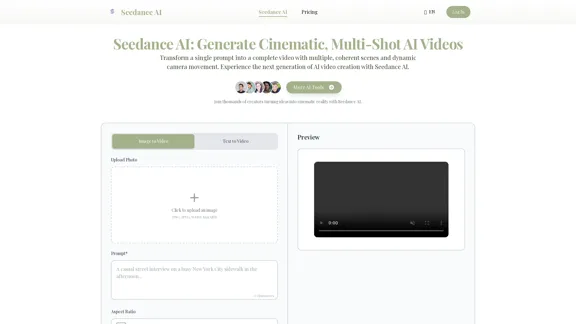
Seedance AI - Générateur de vidéos AI multi-plans cinématographiques
Seedance AI - Générateur de vidéos AI multi-plans cinématographiquesAvec Seedance AI, vous pouvez créer sans effort de superbes vidéos cinématographiques à partir de simplement du texte. Notre technologie IA avancée tisse des récits cohérents tout en intégrant des mouvements de caméra dynamiques pour élever votre narration. Essayez-le gratuitement !
0
Voir les détails
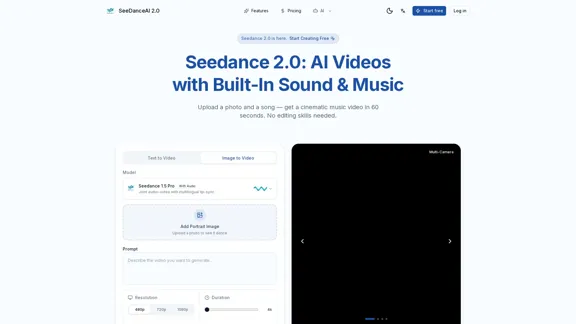
Seedance 2.0 - Générateur de vidéos AI audio natif
Seedance 2.0 - Générateur de vidéos AI audio natifCréez des vidéos cinématiques 2K époustouflantes sans effort avec Seedance 2.0 de ByteDance. Profitez de fonctionnalités telles que la synchronisation audio native, la cohérence multi-plan et le support pour des entrées multimodales. Essayez-le gratuitement aujourd'hui !
--

Voir les détails
Veo3 AI - Création de vidéos instantanées en 8 secondes
Veo3 AI - Création de vidéos instantanées en 8 secondesAvec Veo3 AI, vous pouvez créer sans effort des vidéos accrocheuses de 8 secondes à partir de textes, d'images ou d'articles. Découvrez la rapidité et la qualité de la génération de vidéos créatives comme jamais auparavant.
0
Voir les détails
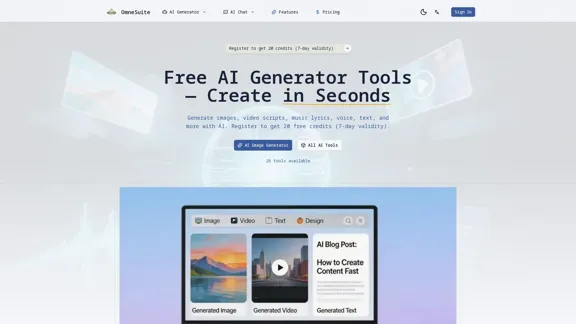
Outils de génération AI - Outils gratuits d'image, vidéo, musique, voix et texte AI
Outils de génération AI - Outils gratuits d'image, vidéo, musique, voix et texte AIDécouvrez une suite d'outils IA gratuits conçus pour générer des images, créer des scripts vidéo, écrire des paroles de musique, convertir du texte en parole, et plus encore. Inscrivez-vous gratuitement pour recevoir 20 crédits valables pendant 7 jours. Votre centre unique pour tout ce qui concerne la génération IA.
--